Learn · Suspension Bridge Records
Suspension Bridge Records: How 18 Bridges Were Built
Eighteen suspension bridges, from Akashi Kaikyo to the self-anchored Sorok Bridge: the key facts, how each one was built, and the original construction records to read in the browser or download.
Every long suspension bridge is built in roughly the same order: foundations and anchorages, towers, a pilot rope across the water, catwalks, the main cables, cable bands and hangers, and finally the deck. What changes from bridge to bridge is how each step was solved: how the pilot rope crossed a busy strait, whether the cables were spun wire by wire in the air or pulled across as prefabricated strands, whether the deck went up as truss panels or as box girder segments lifted from barges, and how wind, typhoons and even an earthquake were handled on the way.
This section collects the construction records of 18 suspension bridges built between the late 1980s and the 2010s, in Japan, Korea, China and Hong Kong, Europe, Türkiye, the United States and Kazakhstan. Each bridge page gives the key facts, a short account of how it was built, one photograph, and the records themselves: construction books, photo records and reports that you can page through in the browser or download.
The bridges
18 of 18 bridges
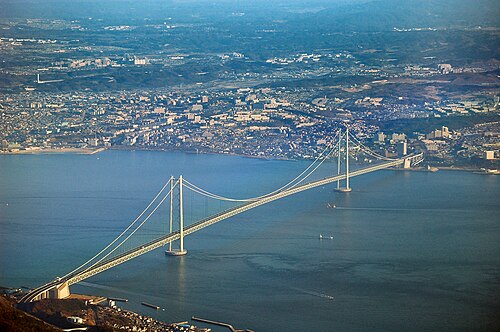 Akashi Kaikyo BridgeJapan · 1998 · main span 1,991 mPPWS
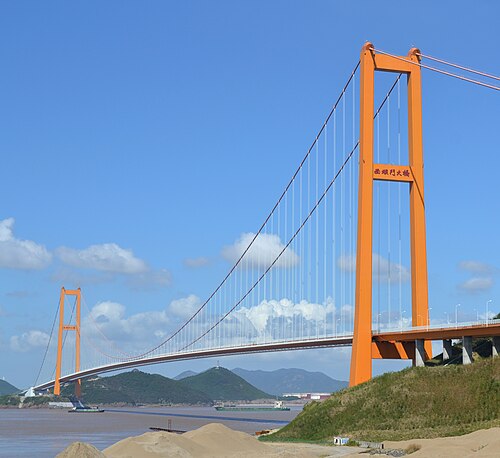 Xihoumen BridgeChina · 2009 · main span 1,650 mPPWS
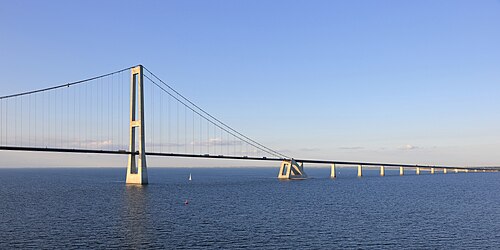 Great Belt East BridgeDenmark · 1998 · main span 1,624 mAir spinning
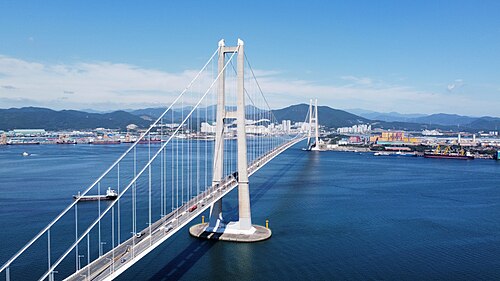 Yi Sun-sin BridgeSouth Korea · 2013 · main span 1,545 mAir spinning
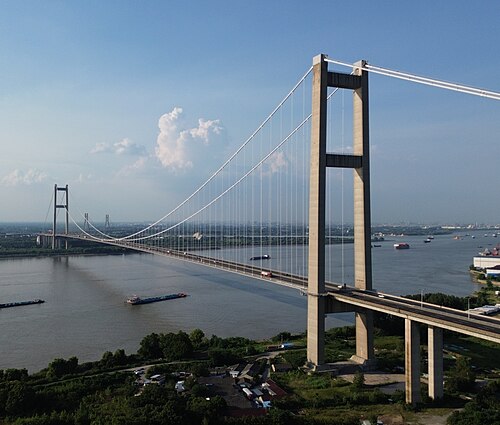 Runyang Yangtze River BridgeChina · 2005 · main span 1,490 mPPWS
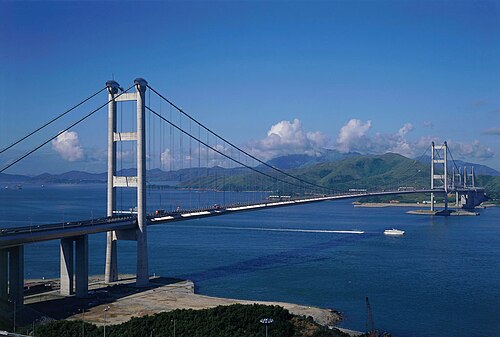 Tsing Ma BridgeChina (Hong Kong SAR) · 1997 · main span 1,377 mAir spinning
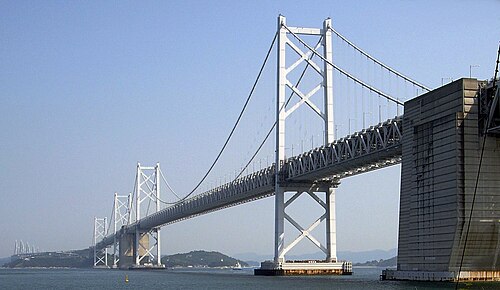 Kita and Minami Bisan-SetoJapan · 1988 · main span 1,100 mPPWS
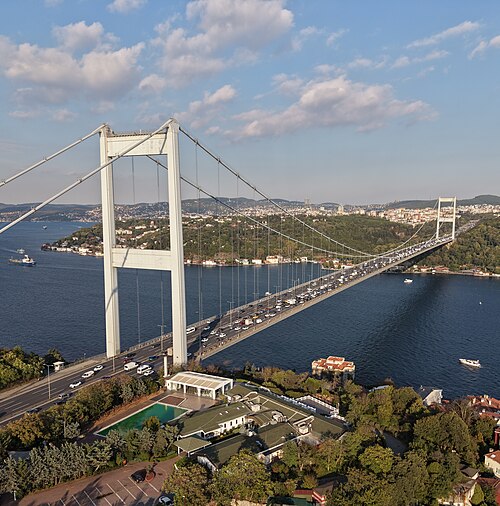 Fatih Sultan Mehmet BridgeTürkiye · 1988 · main span 1,090 mAir spinning
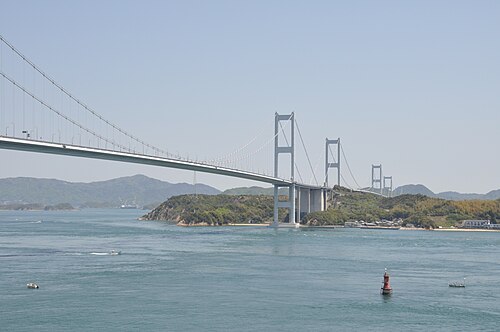 Kurushima Kaikyo BridgesJapan · 1999 · main span 1,030 mPPWS
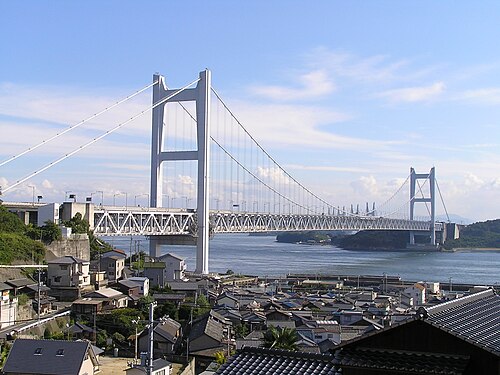 Shimotsui-Seto BridgeJapan · 1988 · main span 940 mAir spinning
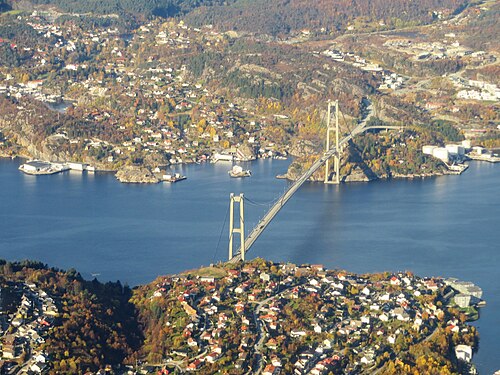 Askøy BridgeNorway · 1992 · main span 850 mLocked coil strands
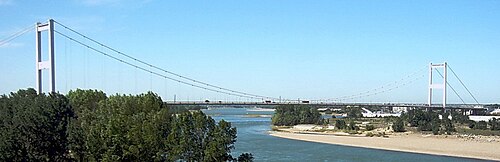 Irtysh River Bridge, SemeyKazakhstan · 2000 · main span 750 mearth-anchored
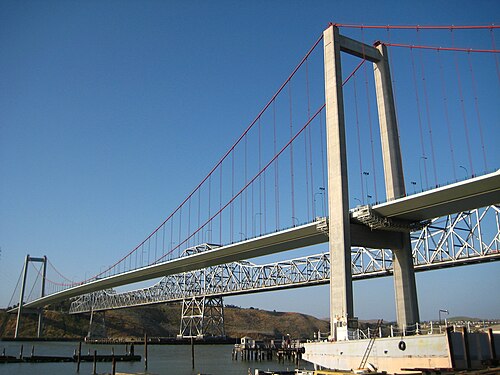 Carquinez Bridge (Al Zampa)United States · 2003 · main span 728 mAir spinning
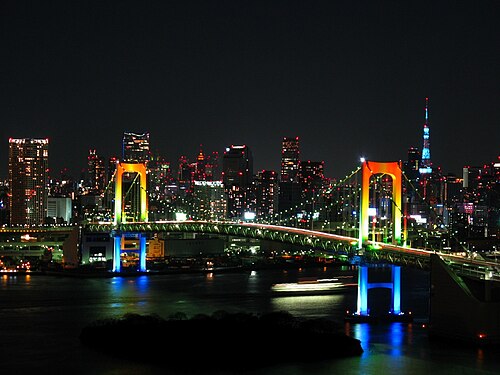 Rainbow Bridge, TokyoJapan · 1993 · main span 570 mPPWS
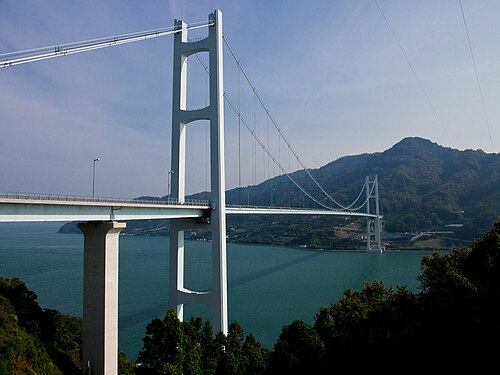 Toyoshima BridgeJapan · 2008 · main span 540 mAir spinning
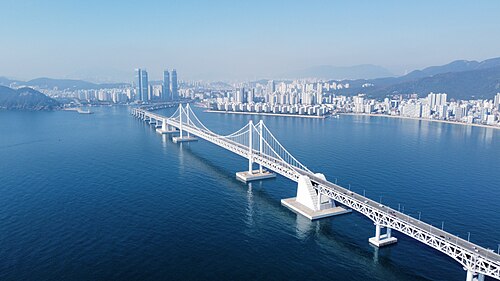 Gwangan BridgeSouth Korea · 2003 · main span 500 mAir spinning
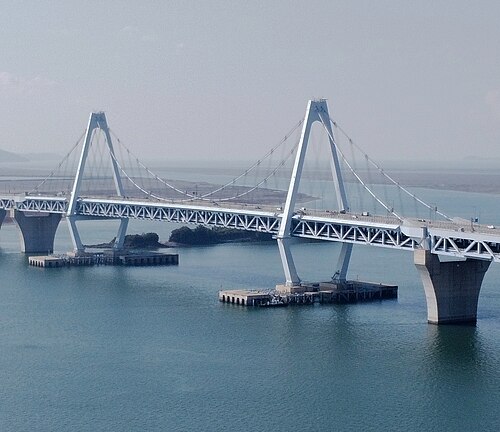 Yeongjong BridgeSouth Korea · 2000 · main span 300 mAir spinning · self-anchored
Main spans compared
Main span and year of opening, longest first.
At a glance
All 18 bridges by year of opening. Scroll sideways on a phone.
| Bridge | Country | Opened | Main span | Cable | Deck | Anchorage |
|---|---|---|---|---|---|---|
| Fatih Sultan Mehmet Bridge | Türkiye | 1988 | 1,090 m | Air spinning | Steel box | Earth-anchored |
| Kita and Minami Bisan-Seto | Japan | 1988 | 1,100 m | PPWS | Steel truss, road and rail | Earth-anchored |
| Shimotsui-Seto Bridge | Japan | 1988 | 940 m | Air spinning | Steel truss, road and rail | Earth-anchored |
| Askøy Bridge | Norway | 1992 | 850 m | Locked coil strands | Steel box | Earth-anchored |
| Rainbow Bridge, Tokyo | Japan | 1993 | 570 m | PPWS | Steel truss, double deck | Earth-anchored |
| Tsing Ma Bridge | China (Hong Kong SAR) | 1997 | 1,377 m | Air spinning | Steel box truss, road and rail | Earth-anchored |
| Akashi Kaikyo Bridge | Japan | 1998 | 1,991 m | PPWS | Steel truss | Earth-anchored |
| Great Belt East Bridge | Denmark | 1998 | 1,624 m | Air spinning | Steel box | Earth-anchored |
| Kurushima Kaikyo Bridges | Japan | 1999 | 1,030 m | PPWS | Steel box | Earth-anchored |
| Irtysh River Bridge, Semey | Kazakhstan | 2000 | 750 m | Not confirmed | Steel girder | Earth-anchored |
| Yeongjong Bridge | South Korea | 2000 | 300 m | Air spinning | Steel truss, double deck | Self-anchored |
| Carquinez Bridge (Al Zampa) | United States | 2003 | 728 m | Air spinning | Steel box | Earth-anchored |
| Gwangan Bridge | South Korea | 2003 | 500 m | Air spinning | Steel truss, double deck | Earth-anchored |
| Runyang Yangtze River Bridge | China | 2005 | 1,490 m | PPWS | Steel box | Earth-anchored |
| Toyoshima Bridge | Japan | 2008 | 540 m | Air spinning | Steel girder | Earth-anchored |
| Sorok Bridge | South Korea | 2009 | 250 m | PPWS | Steel box | Self-anchored |
| Xihoumen Bridge | China | 2009 | 1,650 m | PPWS | Split twin steel box | Earth-anchored |
| Yi Sun-sin Bridge | South Korea | 2013 | 1,545 m | Air spinning | Twin steel box | Earth-anchored |
What to compare across the records
- Main cable erection. Air spinning builds the cable wire by wire on site; prefabricated parallel wire strands (PPWS) are made to length in a factory and pulled across one strand at a time; a few bridges use locked coil strands. The cable erection page explains each method.
- Deck type and erection. Stiffening trusses erected panel by panel, against streamlined steel box girders lifted from barges in long segments, and how the deck joints were kept free until the dead load was on.
- Towers and foundations. Steel towers erected with climbing cranes, against slip-formed concrete towers, and caissons set in deep, fast-flowing straits.
- Earth-anchored or self-anchored. Most of these bridges anchor their cables in the ground; Yeongjong and Sorok anchor them in the deck, which changes the whole erection sequence. See self-anchored suspension bridges.
- Geometry control. How the cable sag, tower tops and saddle positions were measured and corrected during erection; see suspension bridge analysis.
Photo credits
- Akashi Kaikyo Bridge: Tysto, Public domain, via Wikimedia Commons
- Askøy Bridge: Bjoertvedt, CC BY-SA 3.0, via Wikimedia Commons
- Carquinez Bridge (Al Zampa): Kevin Collins, CC BY 2.0, via Wikimedia Commons
- Fatih Sultan Mehmet Bridge: Glabb, CC BY-SA 3.0, via Wikimedia Commons
- Great Belt East Bridge: Martin Falbisoner, CC BY-SA 4.0, via Wikimedia Commons
- Gwangan Bridge: Glabb, Public domain, via Wikimedia Commons
- Irtysh River Bridge, Semey: Evgeny Gerashchenko, CC BY-SA 3.0, via Wikimedia Commons
- Kita and Minami Bisan-Seto: Toto-tarou, edited by Sam, CC BY-SA 3.0, via Wikimedia Commons
- Kurushima Kaikyo Bridges: mukarin, CC BY-SA 2.0, via Wikimedia Commons
- Rainbow Bridge, Tokyo: Gussisaurio, CC BY-SA 3.0, via Wikimedia Commons
- Runyang Yangtze River Bridge: Glabb, CC BY-SA 3.0, via Wikimedia Commons
- Shimotsui-Seto Bridge: Tatushin, Public domain, via Wikimedia Commons
- Sorok Bridge:
- Toyoshima Bridge: jun*sawase, CC BY-SA 2.0, via Wikimedia Commons
- Tsing Ma Bridge: mageba sa, GFDL, via Wikimedia Commons
- Xihoumen Bridge: Glabb, Public domain, via Wikimedia Commons
- Yeongjong Bridge: Glabb, Public domain, via Wikimedia Commons
- Yi Sun-sin Bridge: Glabb, Public domain, via Wikimedia Commons
Related on TheBridgeEng
Questions engineers ask
- What is the difference between air spinning and PPWS?
- Air spinning builds the main cable on site, wire by wire, with spinning wheels running between the anchorages. In the prefabricated parallel wire strand (PPWS) method, strands of typically 61 to 127 wires are made to length in a factory and pulled across one at a time. Among these records, Shimotsui-Seto, Fatih Sultan Mehmet, Tsing Ma, Great Belt East, Yeongjong, Gwangan, Carquinez, Toyoshima and Yi Sun-sin were air spun, while Akashi Kaikyo, Bisan-Seto, Rainbow, Kurushima Kaikyo, Runyang, Sorok and Xihoumen used PPWS, and Askøy uses locked coil strands.
- Can I download the construction records?
- Yes. Each bridge page lists its records with a Preview button, which opens the file in the Google Drive viewer, and a Download button. Most are large scanned PDFs; for files over 100 MB Google Drive asks you to confirm the download.
- Which of these bridges are self-anchored?
- Yeongjong Bridge in Incheon and Sorok Bridge in Goheung anchor their main cables in the deck instead of in the ground. All the other bridges in the collection are earth-anchored.
Updated 2026-11-13 · written by a practising bridge engineer