How bridges get built · Piers, pylons and abutments · Slipform
Also called: sliding formwork, continuous pour, slip forming
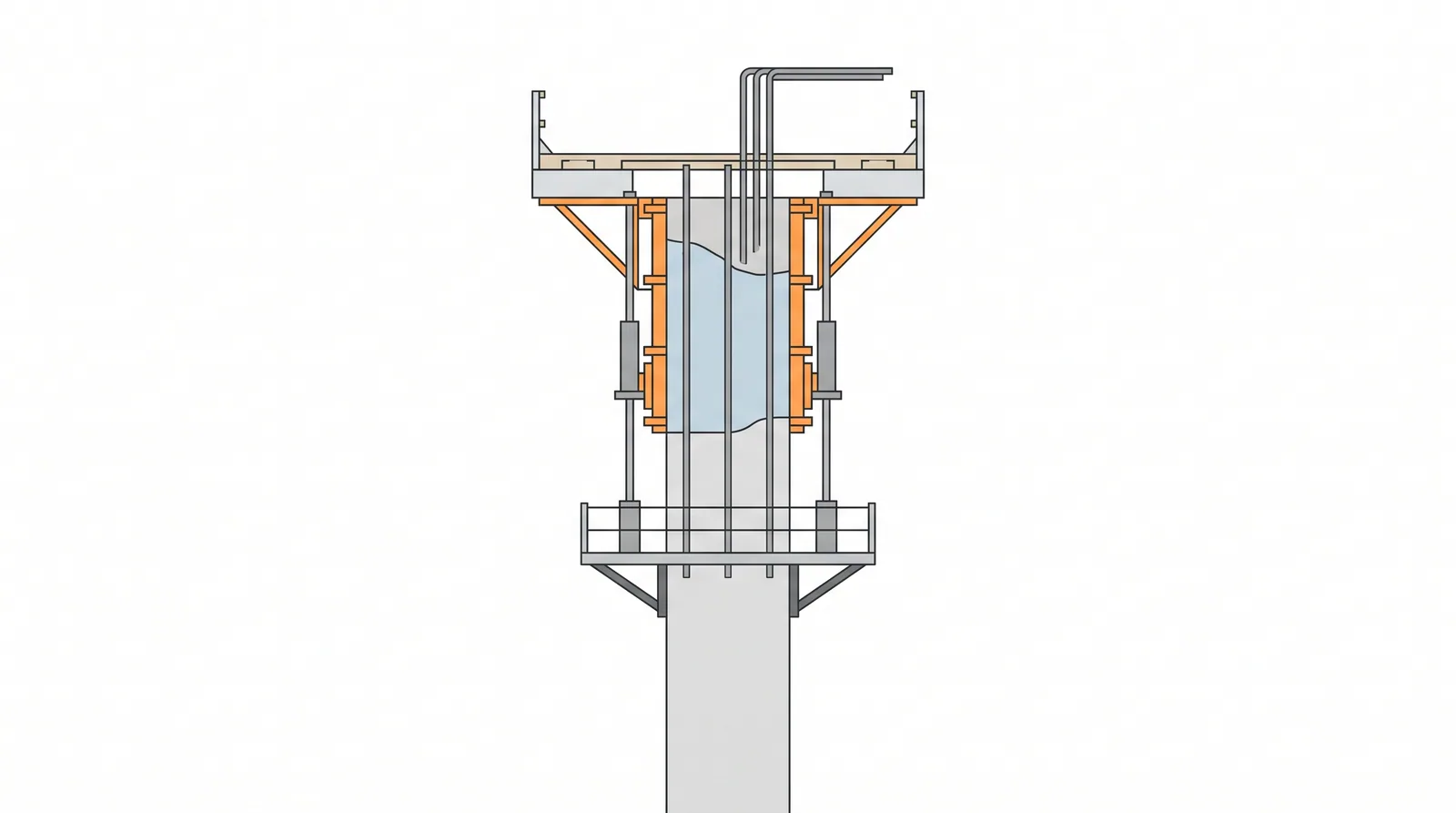
How it is done
- Erect the slipform rig on the starter with jacks, yokes and working decks; begin pouring and jacking at 100-300 mm per hour.
- Place reinforcement and inserts continuously ahead of the form; keep the concrete setting just as it leaves the form.
- Run 24 hours until the top; taper by adjusting the yokes if the design allows.
Where it fits
- Tall piers and pylons with constant or slowly varying sections, silos and towers, remote sites with a skilled crew.
Where it does not
- Sections that change sharply, heavily congested anchorage zones, sites that cannot guarantee continuous concrete supply.
Plant, pace and money
PlantSlipform rig, jacks and rods, continuous concrete supply, night lighting.
Productivity3-6 m per day.
CostCheaper than climbing forms per metre once running; expensive to stop.
Risks and controls
What goes wrong
- Concrete setting in the form (lifting tears) or too slow (slumping out), rod buckling, geometry drift, crew fatigue.
Quality assurance
Continuous survey, concrete set-time testing every batch, rod load monitoring.
Examples
Norwegian and Scandinavian bridge piers, some Chinese pylons, offshore concrete towers.
Related methods
Further reading
ACI 313 · Norwegian slipform practice guides