How bridges get built · Site investigation and testing · Bi-directional (Osterberg cell) load test
Also called: O-cell test, bi-directional static load test
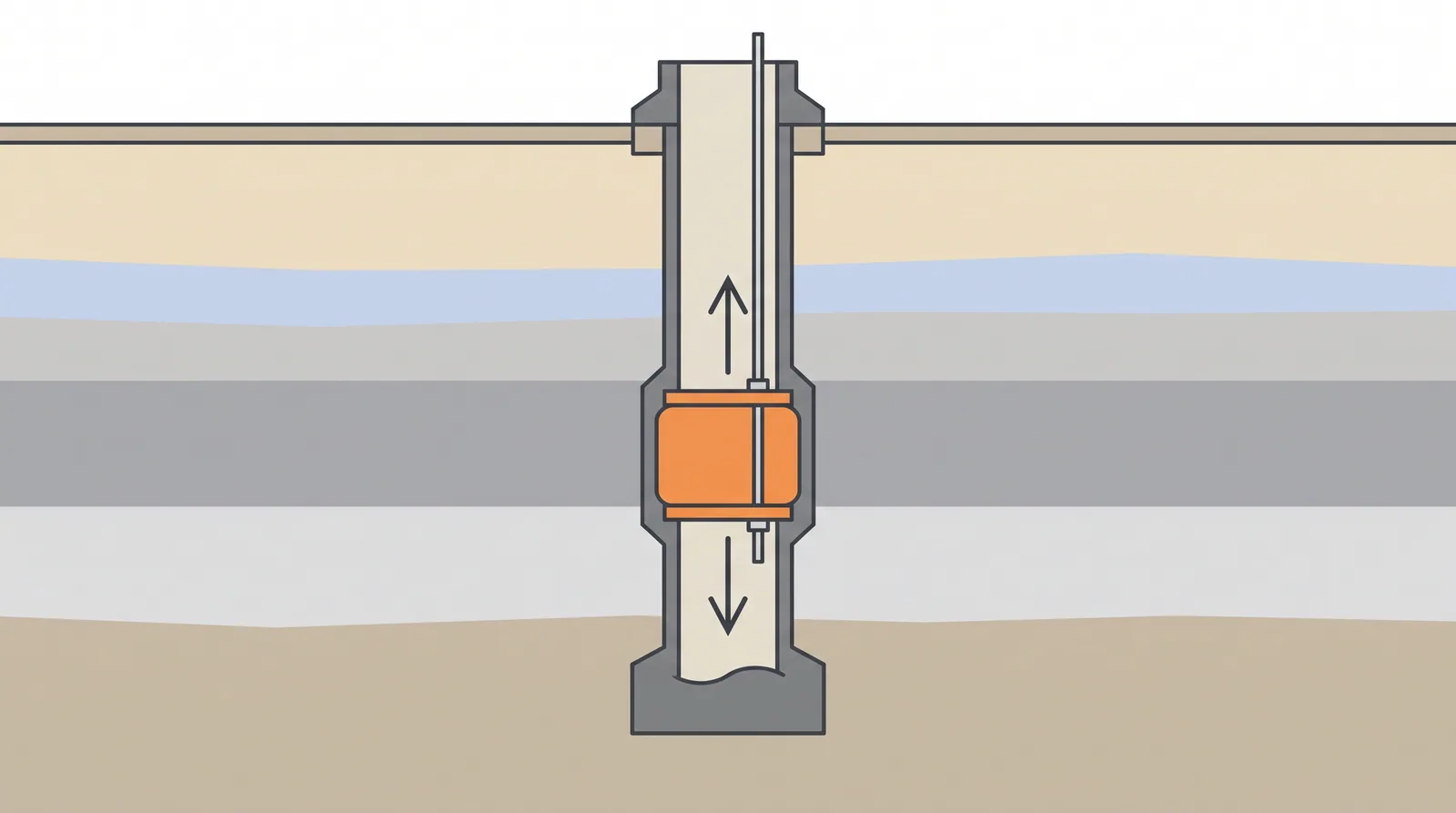
How it is done
- Weld one or more cells into the reinforcement cage at the level that balances expected shaft and base resistance; add strain gauges and telltales.
- Concrete the pile; after curing, pressurise the cell in steps and record upward and downward movements.
- Combine the two curves into an equivalent top-down load-settlement curve.
Where it fits
- Bored piles and barrettes above about 1.5 m diameter, pylon foundations, marine piles where reaction systems are impractical.
- Tests to 50-300 MN.
Where it does not
- Driven piles (the cell cannot be cast in); small piles where a conventional test is cheaper.
Plant, pace and money
PlantThe cell, hydraulic pump, data logger; no reaction frame.
ProductivityOne to two days of testing after curing; the cell is sacrificial.
CostUSD 100,000-400,000 per test depending on cell size; cheaper than kentledge above about 20 MN.
Risks and controls
What goes wrong
- Cell placed at the wrong level gives an unbalanced test that stops early.
- The tested pile is usually not used as a production pile without grouting the cell.
Quality assurance
Pre-test cage inspection, calibrated cells, strain gauge levels matched to the soil profile.
Examples
Used on most long-span bridge pylon foundations since the 1990s, including sea bridges in the Gulf and Asia.
Related methods
Static pile load testDrilled shafts (bored piles) with casing or slurryBarrettes and diaphragm-wall foundations
Further reading
ASTM D8169 · Osterberg, 1989 onwards