How bridges get built · Site investigation and testing · Pile integrity testing (sonic echo and cross-hole sonic logging)
Also called: low-strain test, PIT, CSL, thermal integrity profiling
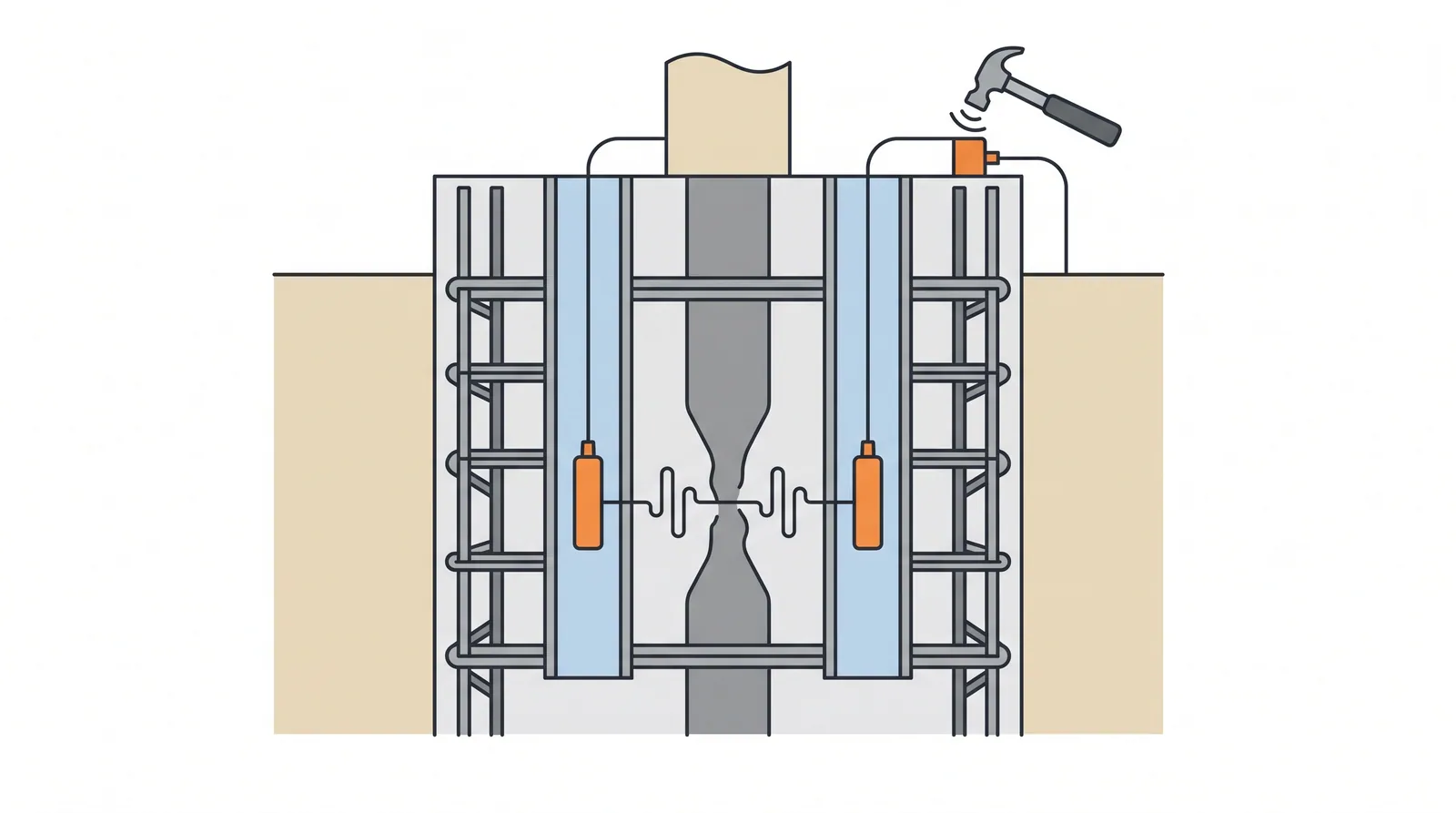
How it is done
- Cross-hole: cast three to six steel or PVC tubes in the cage; after curing, lower a transmitter and receiver down pairs of tubes and log first-arrival time with depth.
- Sonic echo: strike the trimmed pile head and read reflections for a length-to-diameter ratio up to about 30.
- Thermal: fibre optics or thermal wires read the concrete temperature 12-48 hours after pouring; cold zones are defects or reduced cover.
Where it fits
- All bored piles on bridges; CSL is standard on shafts above 1 m.
- Driven concrete piles suspected of driving damage (sonic echo).
Where it does not
- Sonic echo on long slender piles or piles with many joints; the signal is lost.
Plant, pace and money
PlantCSL logger and probes, PIT hammer and accelerometer, thermal wires and readout.
ProductivityFour to ten piles per day.
CostUSD 500-2,000 per pile for CSL; a few hundred for sonic echo.
Risks and controls
What goes wrong
- Tubes debonding from the concrete give false anomalies.
- Anomalies near the toe are hard to distinguish from base debris.
Quality assurance
Anomaly rating criteria agreed before testing; coring or grouting protocol for confirmed defects.
Examples
Every large-diameter shaft on modern sea bridge pylons carries CSL tubes.
Related methods
Drilled shafts (bored piles) with casing or slurryTremie concreting of pilesDynamic load testing (PDA) and signal matching
Further reading
ASTM D6760 (CSL) · ASTM D5882 (sonic echo) · ASTM D7949 (thermal)