How bridges get built · Shallow foundations, cofferdams and dewatering · Pile caps in water
Also called: high pile cap, low pile cap, cap in cofferdam
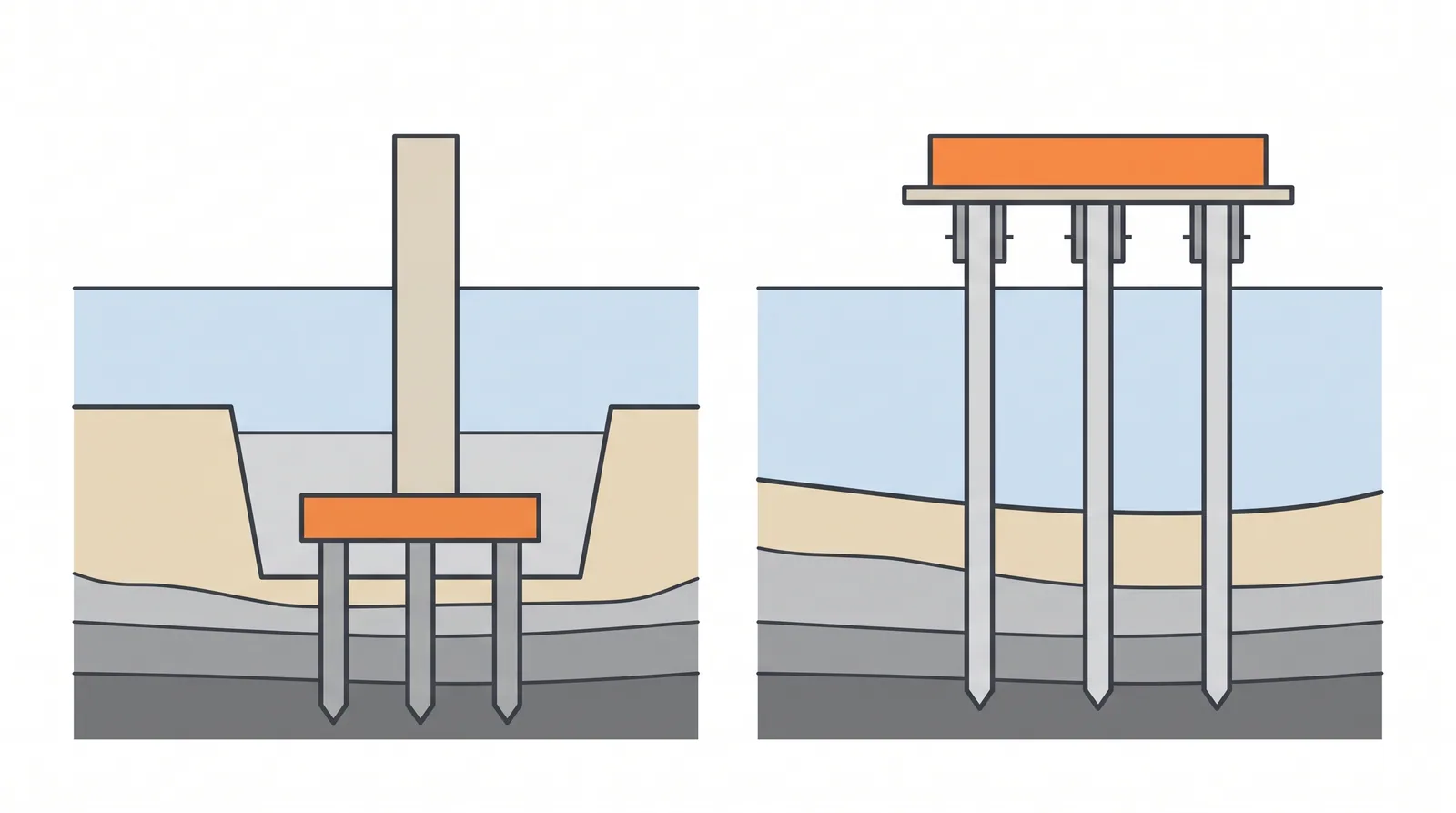
How it is done
- Low cap: cofferdam, excavate below the bed, tremie seal, cut piles to level, cast the cap dry.
- High cap: weld brackets to the piles, hang a steel or precast soffit form, pour above the tide or use a tremie for the bottom lift.
- Either way: check pile head cut-off levels and embedment into the cap (typically 100-150 mm plus bars), and cast the pier starter with the cap.
Where it fits
- Low caps: navigable rivers with ship impact, high scour, aesthetics of piers rising from the water. High caps: sea viaducts with many piers, tidal sites where speed matters, no ship impact.
Where it does not
- High caps in the splash zone in aggressive waters without extra cover and coatings.
Plant, pace and money
PlantCofferdam or suspended formwork, cranes or barges, tremie equipment.
ProductivityLow cap 4-8 weeks per pier; high cap 2-3 weeks.
CostLow caps cost 2-3 times high caps because of the cofferdam and seal.
Risks and controls
What goes wrong
- Scour exposing a high cap; ship impact; chloride attack in the tidal zone.
Quality assurance
Pile cut-off survey, cover meter checks, curing of the splash-zone concrete.
Examples
Sea viaducts in the Gulf and Hong Kong use high caps with precast shells; river bridges in Korea use low caps below the bed.
Related methods
Further reading
AASHTO LRFD 10.7 · Tomlinson and Woodward, Pile Design and Construction Practice