How bridges get built · Finishing, articulation and maintenance · Parapets, barriers and edge details
Also called: bridge barriers, crash barriers, parapet construction, slipformed barriers
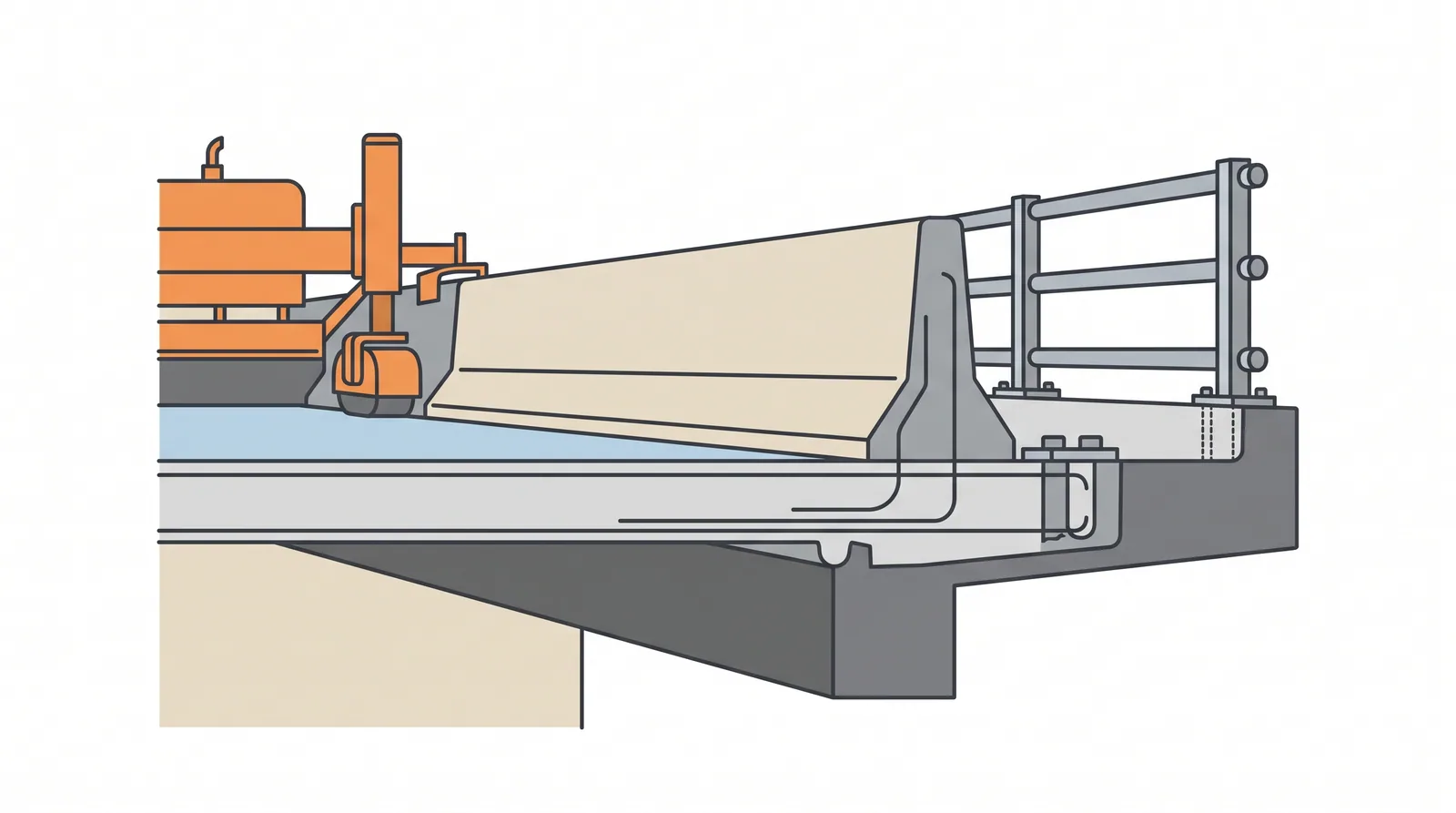
How it is done
- Cast the deck edge with the barrier starter bars or sockets; slipform or cast the concrete barrier in one pass, or bolt the steel parapet to sockets set with a template.
- Install drip grooves and drainage at the edge; fix cable troughs, lighting columns and noise screens to the barrier.
- Add transitions to the approach barriers and the end terminals.
Where it fits
- All bridges; containment level by road class.
Where it does not
- Barrier bases without drainage (water sits against the deck edge); untested transitions.
Plant, pace and money
PlantSlipform paver or forms, small crane for steel parapets.
ProductivitySlipformed 300-1,000 m per day.
CostUSD 300-800 per metre depending on type.
Risks and controls
What goes wrong
- Bar anchorage at the deck edge, cracking of slipformed barriers, transitions failing in impact.
Quality assurance
Crash test certificates for the system, anchorage inspection, transition details checked.
Examples
F-shape and single-slope concrete barriers on highways; steel parapets on urban and rail bridges.
Related methods
Deck slabs on girders: cast-in-place, precast panels and stay-in-place formsDeck waterproofing and drainage
Further reading
AASHTO MASH · EN 1317