How bridges get built · Ground improvement · Lightweight fill (EPS geofoam, foamed concrete, LWA)
Also called: EPS blocks, foamed concrete, lightweight aggregate fill
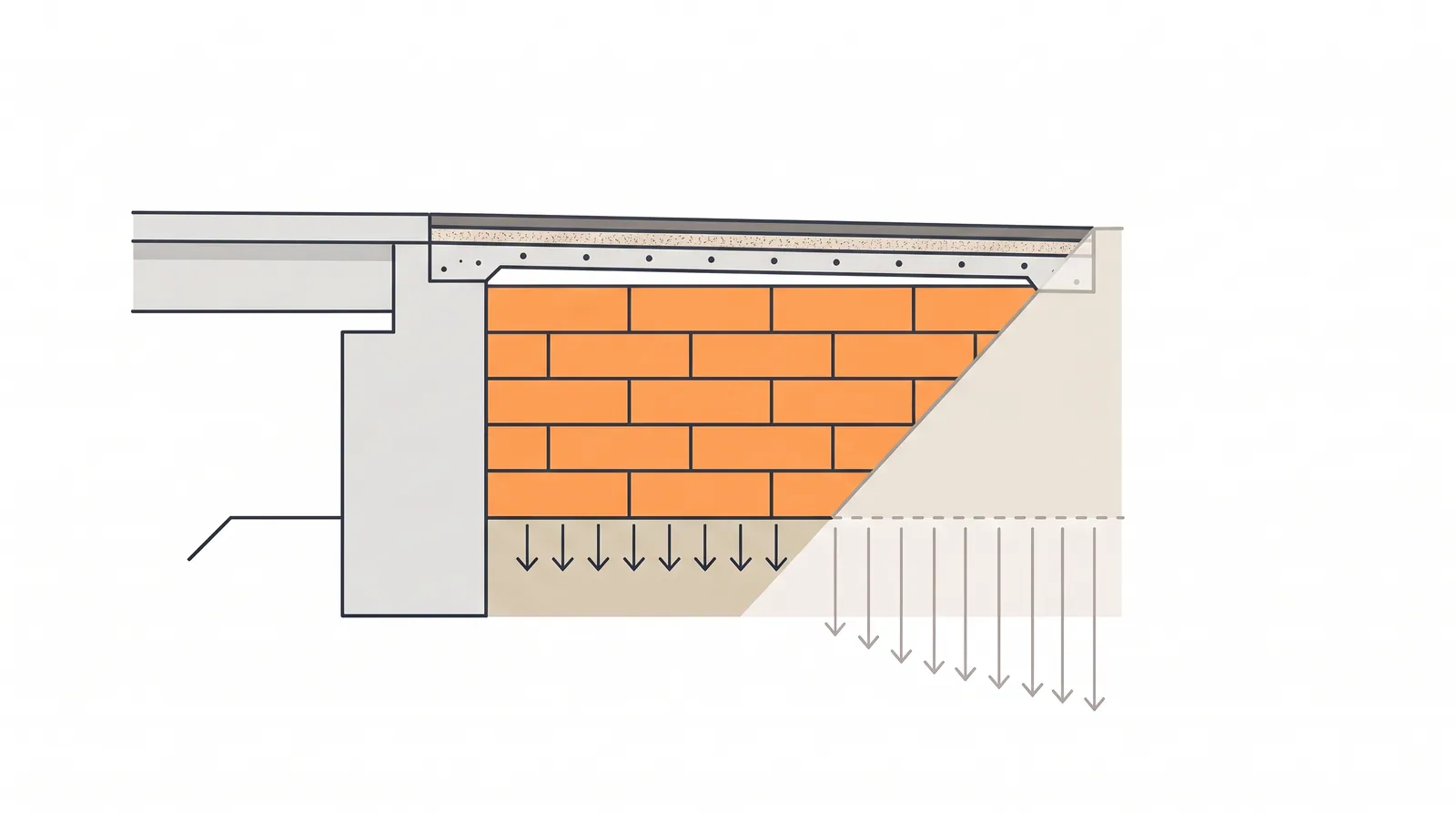
How it is done
- Excavate to a level base, place a sand bed and a geomembrane; stack EPS blocks in bond with plastic connectors.
- Cover with a concrete load-distribution slab and the pavement; protect the sides from fuel spills and fire with a membrane and soil cover.
- Foamed concrete is pumped in lifts of 0.5-1 m behind formwork or against the abutment.
Where it fits
- Approaches over soft clay where PVD time is unavailable, behind abutments to cut lateral earth pressure, widening next to old embankments.
Where it does not
- Below the groundwater table without proper buoyancy design; EPS floats.
Plant, pace and money
PlantLight: trucks, a small crane, a foamed concrete unit.
Productivity500-1,500 m3 of EPS per day.
CostEPS USD 60-120 per m3 installed; foamed concrete USD 80-150 per m3. Several times ordinary fill, but the settlement and the abutment savings usually pay for it.
Risks and controls
What goes wrong
- Fire during construction, chemical attack from fuel spills, differential settlement at the transition to ordinary fill.
Quality assurance
Block density certificates, level survey of each layer, membrane inspection.
Examples
Norwegian and Dutch approaches since the 1970s; increasingly common in Japan and Korea for approach widening.
Related methods
Prefabricated vertical drains with surchargePiled embankment with load-transfer platformMSE (reinforced soil) abutments
Further reading
EPS Geofoam Applications and Technical Data (EPS Industry Alliance) · BS 8006