How bridges get built · Site investigation and testing · Karst and cavity probing
Also called: probe holes, cavity investigation, grouting investigation
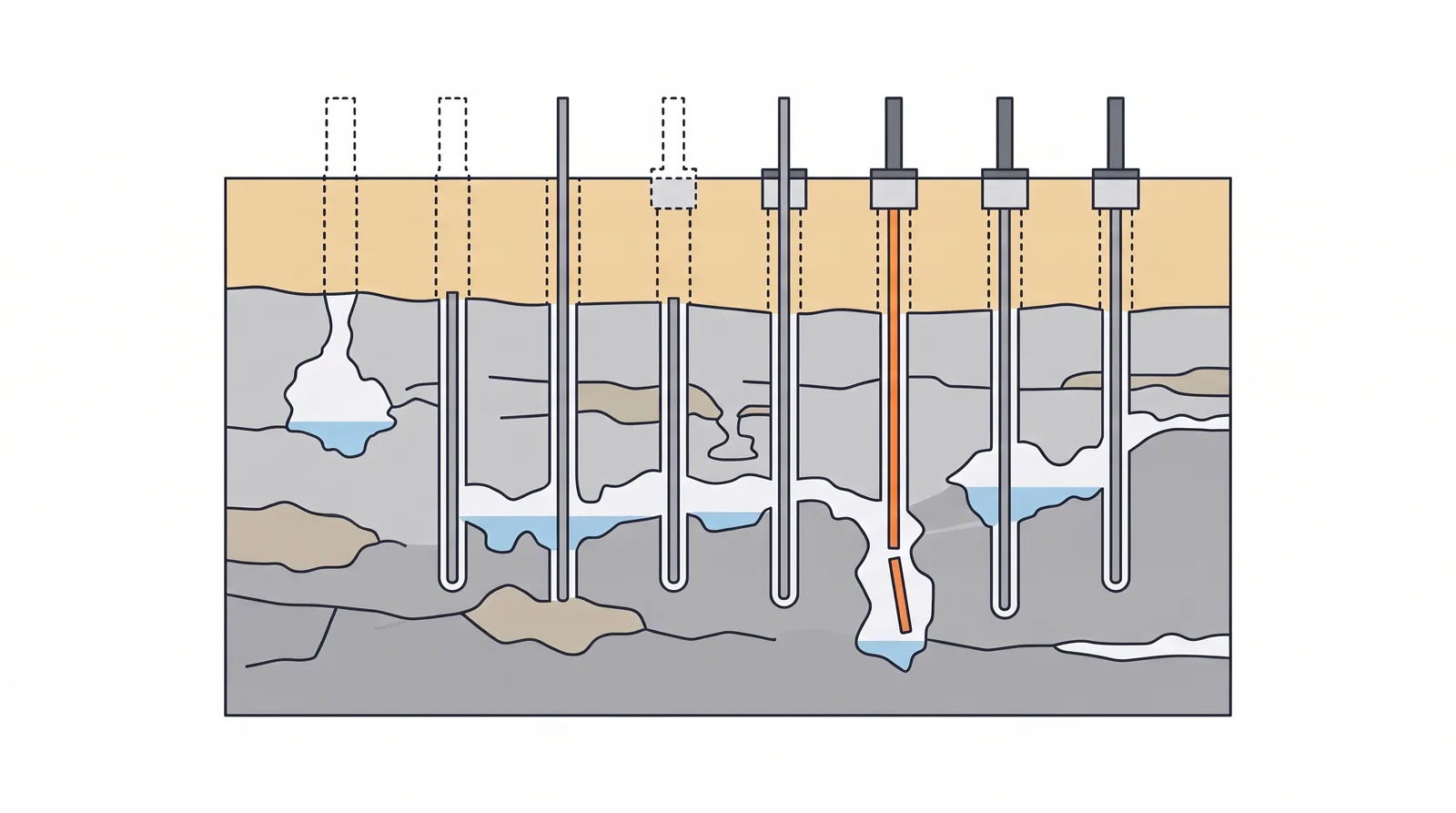
How it is done
- Drill open-hole probes at each pile position to 3-5 m below the design socket base; record drill rate and water loss.
- Where voids or clay-filled fissures are found, deepen the pile, relocate it, or grout the void before piling.
- Use cross-hole sonic or resistivity between probes where the spacing is wide.
Where it fits
- Limestone, dolomite, gypsum and coral rock; any site flagged as karst in the desk study.
Where it does not
- Sizing sockets on a single borehole in karst.
Plant, pace and money
PlantSmall rotary or DTH rigs; grouting plant if treatment follows.
ProductivityOne or two probes per pile per shift.
CostAdds 5-15 % to piling cost in karst; far cheaper than a lost pile.
Risks and controls
What goes wrong
- Voids between probe positions; sudden drill drops during production piling.
Quality assurance
Drill logs with rate and water loss for every probe; a void register tied to pile numbers.
Examples
Kuala Lumpur limestone, Florida, parts of the Gulf coast; the game's karst sites trigger the karst void event when bored piles are used without probing.
Related methods
Rock coring and rock mass loggingDrilled shafts (bored piles) with casing or slurryDeep cement mixing (DCM) and jet grouting
Further reading
Waltham, Bell and Culshaw, Sinkholes and Subsidence